


Assortments aligned to strategy, tuned to customer needs
Effective assortment planning starts with merchandising expertise and customer knowledge. Technology enhances that expertise with data-driven insights that validate instincts and surface patterns humans might miss. By connecting category strategy, space planning, and store-level performance into one view, planners spend less time reconciling data and more time applying their judgment to build assortments that resonate with local shoppers.
Accelerate Informed Decisions With AI Built for Supply Chain
Unsere prädiktiven und generativen agentischen KI-Lösungen basieren auf jahrzehntelanger Innovation und KI-Erfahrung in der Lieferkette und verwandeln Ihre Rohdaten in Vorhersagen und Anleitungen, die Ihren Teams helfen, diese Komplexität zu bewältigen.
Demystifying AI for Supply Chain Leaders
The benefits of artificial intelligence for supply chain leaders are obvious, but the implementation isn't always as straightforward. Learn why (and how) your company should prioritize AI solutions now.
Reorganisation für KI: Wie sich Supply-Chain-Führungskräfte anpassen müssen
90 % der Führungskräfte in der Lieferkette führen derzeit eine Umstrukturierung durch oder werden dies in den nächsten 12 Monaten tun. Viele bereiten ihre Teams auf KI-gesteuerte Lieferkettentechnologie vor, aber wie sollten sie sich für eine KI-zentrierte Zukunft anpassen und umorganisieren?
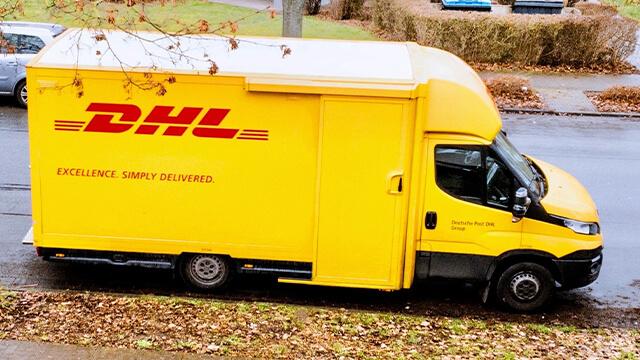
DHL spart 7 % der Transportkosten durch bessere Optimierung von Fahrzeugen und Stopps mit Blue Yonder Network Design
Carlsberg Group
Carlsberg berichtet, wie sie den digital Wandel mithilfe vom Blue Yonder Transportmanagement, der „Zero & Beyond“-Strategie des Unternehmens und weiteren Initiativen vorantreiben.
Walgreens
Das KI-basierte Auftragsmanagement von Blue Yonder sorgt für die „Magie“ hinter dem 30-Minuten-Versprechen für Kundenaufträge von Walgreen.
So wird KI-gestützte Planung die Leistung Ihrer Lieferkette verbessern
Extreme Volatilität, Engpässe bei den Lagerbeständen und Datenflut sind die Herausforderungen, denen sich Unternehmen bei der Lieferkettenplanung stellen müssen. Mit KI-gestützten Planungsfunktionen können diese Herausforderungen durch eine verbesserte Entscheidungsfindung, Agilität und Zusammenarbeit in allen Bereichen der Lieferkette bewältigt werden.
Supply Chain Compass 2025: Wie Supply-Chain-Führungskräfte mit Komplexität umgehen
In dieser Umfrage unter fast 700 Unternehmen haben wir die Führungskräfte der Lieferkette nach ihren Ambitionen, Ängsten, Zielen und Strategien gefragt. Erfahren Sie, in welche Richtung sich die Branche insgesamt entwickelt, wie der Stand der Technik im Lieferkettenmanagement ist, warum der Optimismus ungebrochen ist und welche Maßnahmen vorrangig ergriffen werden, um strategische Ziele wie die Stärkung der Widerstandsfähigkeit, die Einführung neuer Technologien und mehr Nachhaltigkeit zu erreichen.
Über Silos hinaus: Entwicklung zu einer unternehmensweiten Lieferkette
Incisiv untersucht den bedeutenden Wandel, der sich in modernen Lieferketten vollzieht, und geht auf die zunehmende Abkehr von fragmentierten Prozessen und Einzellösungen hin zu flexibleren Plattformen und kollaborativen Arbeitsabläufen ein. Diese Entwicklung befasst sich mit systemischen Problemen wie Inflexibilität und unzusammenhängender Kommunikation und verbessert die Reaktionsfähigkeit, Nachhaltigkeit und Rentabilität der Lieferkette.
Build targeted assortments backed by shopper data and market intelligence. Capture customer preferences and purchase patterns to recommend product mixes tailored to each store's customer base. By rationalizing SKUs into strategic clusters, retailers eliminate low-performing substitutes while ensuring high-value products stay in stock, maximizing sales per square foot.
Space-aware planning
Optimize assortments with built-in space awareness that aligns product selections to available shelf capacity. Unlike traditional tools that plan in isolation, recommended assortments fit within each store's shelf space and fixture capacity. This eliminates costly rework cycles and ensures planners can build executable assortments the first time.
Rules-based automation
Scale store-specific assortments without manual effort. Rules-based automation applies store clustering and performance data to generate tailored recommendations across your entire network. Planners define strategic parameters and business rules, then the system automatically calculates assortments for each location. This frees merchandising teams to focus on strategic decisions and product selection rather than spreadsheet management.
Continuous optimization
Adapt assortments proactively as demand shifts and performance data updates. Closed-loop planning connects assortment decisions back to sales results, space planning and inventory performance. When market conditions change or new products launch, planners can model scenarios, evaluate impacts across stores, and adjust assortments quickly rather than waiting for the next planning cycle.
Lösungen
Customer-first assortments with AI precision
Build data-driven assortments that reflect customer demand across store formats and channels. AI-powered recommendations analyze purchase patterns, market trends, and performance metrics to optimize product selection and depth. Scenario modeling enables merchandisers to test alternatives and maximize category performance faster.
Build strategic, space-aware assortments that fit every store
Plan executable assortments that fit store formats from the start. Rules-based automation generates store-specific product mixes aligned with available shelf space and fixture capacity. Integration with space planning eliminates rework cycles and accelerates time from planning to execution.
Make smarter decisions with AI-powered intelligence
AI built specifically for retail planning analyzes millions of data points to surface actionable recommendations. Predict which products will resonate before committing inventory, identify underperformers before they impact margins, and adapt assortments with machine speed and precision. Maintain full control while AI handles complex analysis at scale.
One platform supports your entire planning and execution journey. Assortment strategies flow directly to store operations while execution results feed back into planning. This connected system eliminates gaps between decisions and actions, enabling retailers to plan, execute, and adapt as one coordinated operation.
Accelerate value with expert implementation and support
Professional services support successful deployment through proven implementation methodology, change management and hands-on training. From initial configuration to optimization, retail planning experts help merchandising teams become productive quickly and realize value throughout the solution lifecycle.
Modern assortment planning solutions should offer space-aware recommendations that account for shelf capacity constraints, automation that scales planning across your store network, and integration with space and inventory planning to eliminate manual data transfers. Blue Yonder provides these capabilities through a unified Platform that analyzes customer demand and sales performance while respecting physical store constraints. This approach reduces rework cycles, accelerates planning timelines and ensures assortment decisions can be executed immediately without requiring space planners to redesign layouts.
Automated assortment planning streamlines the analysis of thousands of SKUs across hundreds of stores—a task that would take weeks manually. Blue Yonder's solution reduces the time planners spend on manual calculations and data manipulation, allowing them to focus on strategic decisions like product selection and category strategy. The system analyzes sales performance and identifies underperforming products faster than manual processes, enabling quicker responses to market changes and helping retailers maintain more relevant assortments.
Blue Yonder Assortment Planning enables retailers to respond to demand shifts without waiting for the next planning cycle. The platform analyzes sales performance continuously and allows planners to model scenarios, evaluate impacts across stores, and adjust assortments quickly when market conditions change or new products launch. This agility transforms assortment planning from a periodic exercise into an ongoing capability, helping retailers maintain relevance as customer preferences evolve.
ROI comes from three sources: Sales growth from better product-market fit, margin improvement from eliminating underperforming SKUs and efficiency gains from faster planning cycles. When assortments align with local customer demand and available shelf space, retailers reduce stockouts on high-performing products while avoiding overstock on low-performers. The automation reduces planning time from weeks to days, allowing merchandising teams to focus on strategic decisions rather than manual calculations and spreadsheet management.
Retailers need assortment planning solutions when manual processes can't keep pace with business complexity—typically when expanding to new store formats or geographies, managing thousands of SKUs across diverse customer segments, or struggling with stockouts despite high inventory. The solution addresses the core challenge of scaling localized product selections while maintaining consistency with brand standards and financial targets. If your planning cycles take weeks and still result in one-size-fits-all assortments, automated planning delivers immediate value.